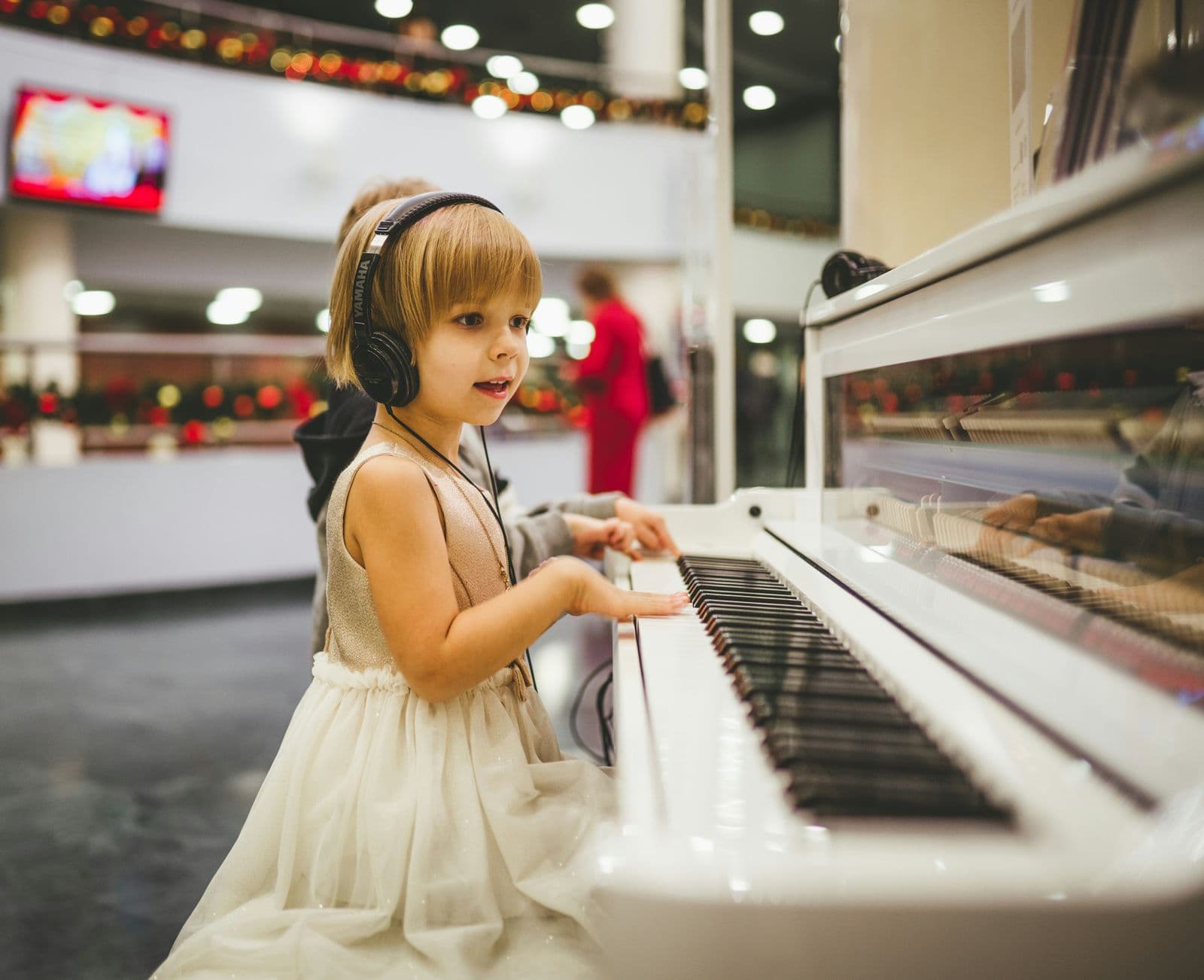
Last year, I decided to start piano lessons for my 5-year-old. I had no idea where to begin. So I did what most Seattle parents do - I went deep into research mode. I talked to teachers, read the studies, and asked every question I was too embarrassed to ask out loud. Here's everything I found.
"The question isn't just 'how old?' — it's 'how ready?' And those are very different questions."
The sweet spot: ages 5 to 7
Research consistently points to ages 5 to 7 as the ideal window to begin piano. The reason makes intuitive sense once you understand what's happening in your child's brain during these years. Between 5 and 7, the brain is at its most neuroplastic, meaning it forms new connections more readily than at almost any other stage of development.
It's not that older children can't learn piano. They absolutely can. But starting during this window tends to feel more natural, more playful, and less effortful.
That said, age is only one piece of the puzzle. What truly predicts success is readiness — and readiness shows up as specific behaviors, not a birthday.
4 signs your child is ready - whatever their age
Every piano teacher I spoke with mentioned the same four things they look for when deciding if a child is ready to start. These matter far more than age alone.
Sign 1: Can they focus for 15–20 minutes?
Piano lessons require short, sustained attention. If your child can sit through a story or a puzzle without bolting, that's a great signal.
Sign 2: Can they follow 2–3 step instructions?
Early lessons involve multi-step directions — "put your thumb here, press this key, now listen." Basic instruction-following matters.
Sign 3: Can they move fingers independently?
This is a fine motor skill check. Can your child tap each finger one at a time? Piano doesn't work if all fingers move as a single unit.
Sign 4: the most important: Do they show interest in music?
Do they hum along to songs? Ask to touch a piano when they see one? The lessons have to be their dream — not just yours.
If your child shows all four of these signs — even at age 4, or even at age 9 — they're likely ready to thrive in lessons.
Why piano? What the science says
The cognitive benefits of piano lessons for children are well-documented and extend far beyond music.
- Children who took piano lessons for 6 months improved their ability to work spatial tasks — like puzzles — by as much as 30%. Researchers believe music creates new neural pathways in the brain.
- A study in Frontiers in Neuroscience found that children with musical training scored higher on planning, inhibition, and verbal intelligence than peers with no music education.
- Even a few weeks of lessons was enough to improve multisensory processing and reduce depression, stress, and anxiety — in research involving beginners of all ages.
- The auditory skills built through piano overlap significantly with language acquisition, meaning early music education may also support reading and communication skills.
The bottom line: readiness matters. So does the right teacher.
Ages 5 to 7 is a wonderful window to start. But what I've learned — from the research and from talking to dozens of teachers — is that the single biggest factor in whether a child sticks with piano and loves it isn't their age. It's the fit between your child and their teacher.
Some kids need a teacher who leads with play and humor. Others need structure and clear milestones. Some respond to a teacher who uses sheet music from day one; others thrive with a teacher who teaches by ear. A mismatch here — even with a technically excellent teacher — is often why children quit.
That's exactly what Kora was built to solve. We don't just find you a piano teacher. We focus on fit — matching your child's personality, learning style, and musical interests with an independent teacher who's right for them specifically.